
It’s also tough and retraumatising work for which we must band together
I don’t know how many times I’ve said it in the last few weeks: “Nothing about us without us.” Centreing survivors not only in the media and narrative about issues that pertain to us, but in the law reform efforts surrounding the systems we escaped is vital. Nothing grates on the nerves of survivor advocates than discussions that fetishise or infantilise us, or celebrate our bravery with empty announcables and photo-ops that don’t create real change.
Yeah. It’s a rant. But I’m hopeful that the Victorian Parliamentary Inquiry into cults and fringe groups will get the recipe right. Numerous advocates have sat at the table and had the hard conversations, and it seems, on the face of it, that government is listening.
That doesn’t mean they’ll get it right. But hopefully it means we will be at the table to correct them if they get it wrong. The State of Victoria has a history of bold, survivor-led reforms, and that gives me a resolute sort of hope. I witnessed some of those conversations, as my ex-husband was part of one such process during the COVID-19 pandemic, when we were still living together. What I saw was people grieving the death of someone who had not survived the damage of gay conversion therapy. They had their own profound scars from the harmful practices now known as Sexual Orientation or Gender Identity Change Efforts, or change and suppression practices. Yet they sat at the table and refused to settle for crumbs. They said “no” when the law wasn’t where it needed to be.
They were ready to walk away and to be loud in their disagreement if the bill didn’t adequately address and define the problem. They co-created a gold standard law when it comes to change and suppression practices.
They also selflessly retraumatised themselves in the quest for meaningful change. That is happening again.
As an advocate for Survivors of Coercive Cults and High-Control Groups, the co-lead of the Victorian Cult Survivors Network and a member of the working group that is pulling together a mammoth recommendations paper, I’m seeing that again. The stories must be told in their entirety. They are harrowing. That doesn’t just leave a mark on the person who lives it. It leaves a mark on the advocates they turn to for courage and support.
People must tell their stories. To do that, they need support. There is no way around this. However, in time, governments will also understand the duty of care they owe to the survivor advocates who are in the trenches, holding the hopes and stories of survivors with hearts full of care and collateral damage in tandem. There is a cost to change. We are the ones who pay the piper.
With coercive cults and high-control groups, there is a moral injury suffered when you were an active part of a system that entrapped you and others. You have to heal from your own wounds, and you have to grapple with the pain you helped inflict. It’s a lot. That means when we read stories, we cannot read them as impartial onlookers. We know the visceral feelings that surround that story. We sit in a place of deep understanding.
Increasingly, governments and NGO’s are understanding that survivor-led law reform is the only way to fully understand the problems they are presented with, and fully understand what needs to be done. It applies to many things, but with cults and fringe groups in particular, it means the nuances and complicated ways of dodging scrutiny or accountability can actually be captured. It is noble and well-intentioned work, and it cannot be done without the listening ear of the government and brave storytelling by survivors.
I am an advocate. I won’t stop doing what I’m doing. I do it to embolden and support survivors in the hopes of preventing future harm. To this end, I am throwing myself into this with heart and soul. Sometimes one feels like Atlas, holding up the world for survivors, but I am honoured and moved every time someone trusts me with the knowledge of their darkest and most vulnerable moments.
I can do this because I am only five years into my advocacy journey, and I’m blessed with an abnormal exposure to the machine of politics and government (thanks, dominionism).
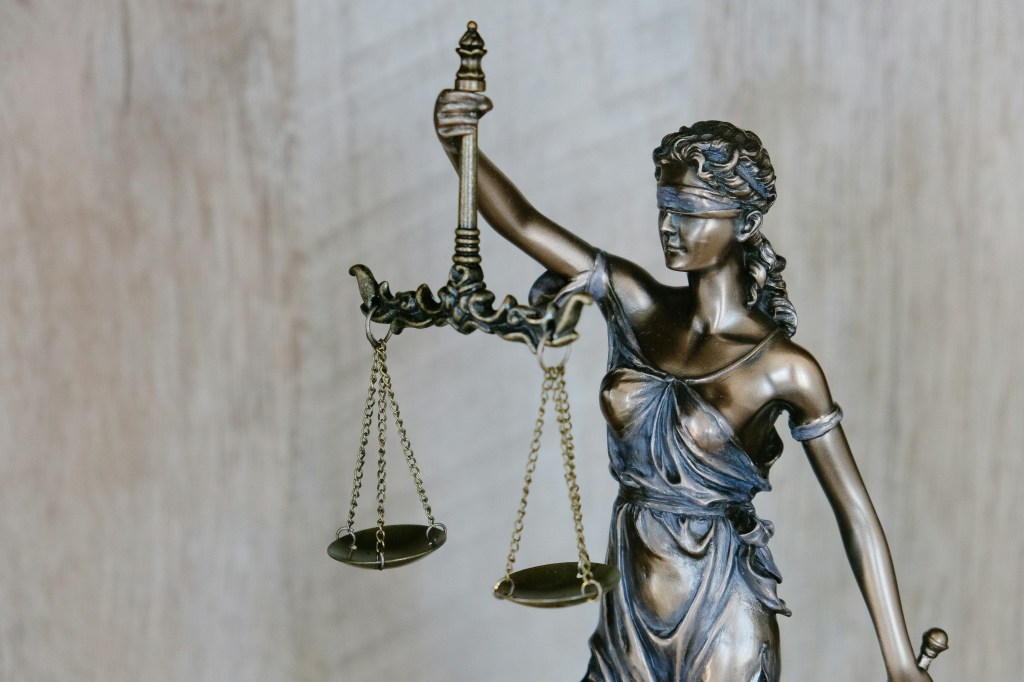
Others are decades into survivor advocacy. Decades of deep care for survivors, deep honour in being trusted with dark information and dark moments. Decades of battle scars and frustration as lawsuits fail because of systems that were set up to obscure the truth and make the victims look like the villains. Decades of standing in front of Lady Justice, asking her to weight their stories, only for the villains in the picture to place their hands on the scales, and smirk at us as our hopes for redress shatter.
I’m hopeful Victoria will get it right, and in doing so, set a standard for other states and jurisdictions. I’m hopeful they will listen and act, having sat with us in the mess and measured a way forward that is preventative and not purely punitive. In a way that enables healthy and free participation in faith or spiritual community…
…But recognises that cults are never free. High-control groups aren’t free – even if they brag that theirs is the only true freedom. This is the fallacy we are called to see through in this moment.
Centring survivors means getting the whole picture
I’ve read too many books or articles about cults by people who were never in one. It’s always missing something. It always feels a little off – a little infantilising, a little fetishised. A little bit like survivors are exotic, caged birds to be gawked at and prodded, but never fully understood. I assume these are well-intentioned, and they are certainly well-researched. Some I have even enjoyed.
I also know how to kill a party. It usually happens when there is a buzz of conversation in a room. Champagne and conversation. A quickly vanishing cheese platter. Laughs. And then somewhere in the din, “Oh, Clare’s a cult leader’s daughter.”
Instant silence. Eyes turn. My stomach sinks to my toes. Yes, I said that I believe that to be the case. Yes, it is a statement I made in national media, knowing fully well the stories of survivors, my own experience and the vast amount of research on the topic. Yes, I would rather split hairs over terms like “high-control group”, “fundamentalist or evangelical right-wing sect”. But these are all terms for the same sort of thing.
Yes. I am a cult leader’s daughter. I’m also a survivor. I’m also an estranged daughter. He is also my dad. Estrangement is grief. Grief is love with nowhere to go.
Not all of us were recruited. We were born in. Both groups have different traumas, and both types must be understood. This requires listening right, and that requires centring survivors. We are used to being asked, “How did you end up in that position? How did you not see the red flags? How did you believe this? etc.”
You know what— being love-bombed is intoxicating. Being cared for in your time of need is deeply…needed. Wanting tribe, and meaning, and idealism, and answers — it’s all inherently human. However, some people are opportunists who create self-serving systems that demand excessive devotion and obedience. Somehow, the Hogwarts School of Cult Leadership churns out the same products with only slight differences, time and time again.
My blood boiled last week when I heard someone on a radio show say that some people thrive in cults. She was an academic from the New Religious Movement school of thought. She was wrong. The only person who thrives in a cult is the leader. The rest just have rotating moments of chaos and recovery, which tricks them into a sense of stability and joy before the wheel turns once more. A journalist and writer who had never been in a cult but who had listened properly tried to fight back (My gosh. Thank you). A megachurch survivor and artist was the third guest in that conversation, and frankly, I didn’t last long enough to hear him speak. He has a right to speak about evangelicalism and its ills. There are plenty! You know I have a million thoughts on evangelicalism and its faults.
But not one member of this conversation was a cult survivor.
Say nothing about us without us.
You know what else I saw last week? The heavy, heavy weight of survivor advocacy as one of us began to crack as empathy cut too close to her own trauma. She called helplines. They told her to call the police. She knew the police would do nothing. The anguish sat with her and her alone. She is doing the work that governments need – the work of supporting survivors, of being a lightning rod for their stories, the work of sitting in her own pain while other people try to find hope to exit hell. She won’t stop. She can’t, just like I can’t. Last week, the heartache got to her. We did our best to support her, knowing any one of us could buckle and need self-care or help next week. It’s hard but needed work that none of us can walk away from. We are all wounded warriors.
Survivors need us to keep going. Government needs us to keep going. I am asking survivors to keep telling their stories. Keep trusting us. Join us in the fight for justice.
I’m also asking the government to foot the bill to support us. Survivor-led law reform is the only way to create meaningful change. It requires that people step into their trauma and fight for prevention as well as redress. It is this work that reduces the economic cost of cult damage. But it costs us to do it.
That’s all I’m saying.
 SOCCHG.ORG
Leave a comment